
Do you have one or more missing permanent teeth? Are they preventing you from smiling or enjoying your favorite foods?
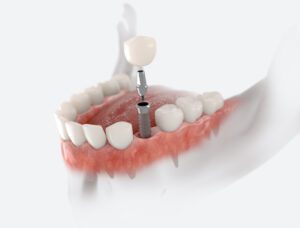
Restore your smile with dental implants in Broomall, PA. Dental implants are durable, long-lasting restorations that replace missing teeth at the root level. A dental implant is a titanium screw that integrates into your natural bone. After your mouth heals over it, it creates a stable foundation for a crown, bridge, or modern denture.

The Benefits of Dental Implants
Missing teeth can cause several other oral and overall health problems, including:
- Tooth decay
- Overcrowded teeth
- Gum disease
- Uneven bite
Dental implants provide these benefits to patients with lost teeth:
- No dietary restrictions
- Fully functional bite
- Improved tooth and gum health
- Improved aesthetics
If you have missing teeth and want a durable restoration, call Williamsburg Dental. Our dentists will work with you to find the right implants or implant-secured restoration for your missing teeth.
Your Guide to the Dental Implant Process at Williamsburg Dental
Getting a dental implant might sound daunting, but it’s actually a really smart way to replace a missing tooth. An implant is a small, strong post that acts like an artificial tooth root. It’s the best way to get a new tooth that looks, feels, and works just like a real one. Here’s a step-by-step guide to how we do it at Williamsburg Dental, and what you can expect from our trusted team.
Step 1: The Planning and Getting Healthy
First things first, we need to make sure your mouth is healthy and ready for an implant. This is like preparing the ground before you build a house. We’ll do a full check-up of your teeth and gums. If you have any cavities or gum disease, we’ll need to treat those first to make sure your mouth is clean and infection-free.
One of the most important things we check is your jawbone. The implant post needs a strong, thick jawbone to hold onto. The bone underneath might have gotten thinner if your tooth has been missing for a while. But we can fix it with a simple procedure called a bone graft.
A bone graft is where we add a special bone grafting material to your jaw to help your body grow new and strong bone there. This might sound scary, but it’s a very common procedure. After a bone graft, we just need to give your body a few months to heal and build up that new bone.
Step 2: Making Your Brand New Tooth
Way before we even place the implant, we start planning for your final results. We use a small scanner to take a super detailed 3D picture of your mouth. We then send this digital model to a dental lab where skilled technicians use it to custom-make your crown, dental bridge, or dentures. They make it the perfect size, shape, and color to blend in seamlessly with your smile.
Step 3: Placing the Implant and Healing
When your mouth is ready, it’s time for the main procedure. We’ll numb the area completely so you don’t feel a thing. The doctor then gently places the small titanium implant post into your jawbone. This post is made from a special metal that your body actually likes. It’s biocompatible, meaning your bone will bond with it.
After the post is placed, the most important phase begins: healing. This is when the bone in your jaw grows around and fuses with the implant post. It’s like the implant becomes a natural part of your body.
This process makes the implant incredibly strong and stable. It creates a foundation that won’t move or slip. This takes time, usually about 3 to 6 months, but it’s what makes implants so much better than other tooth replacements.
Step 4: Getting Your Permanent Tooth
Once we confirm that the implant has fused solidly with your jawbone, you’re ready for the final step! We attach an abutment to the implant post. This abutment is a connector that holds your new tooth in place.
Finally, we securely attach the custom-made crown, bridge, or denture that the lab made for you. And just like that, you have a complete, confident smile that you can eat with, laugh with, and enjoy for many, many years.
Patient Review
Dental Implant FAQs
Learn more about tooth implant treatment with these common dental questions.
How long do dental implants last?
Dental implants are permanent restorations. Once the implants fuse with the jawbone, they become a natural part of your mouth. To ensure the best results, schedule regular appointments in our office for dental cleanings and exams. Continue to brush and floss your teeth and crowns, bridges, or dentures to make them last.
Can dental implants fail?
While dental implants are highly successful with a success rate of over 98%, they can sometimes fail. The most common reason for failure is if your mouth doesn’t heal properly.
Patients who smoke or use other tobacco products have a higher risk of this happening. This is because nicotine causes blood vessels to become narrower. Good blood flow is essential for healing, so when it’s restricted, the implant won’t fuse correctly with the jawbone.
Even after an implant has fully healed, it can still fail later on. If a patient develops new cavities or gum disease around the implant site, the supporting bone can become damaged. This can cause the implant to become loose and eventually fail.
This is why good oral hygiene is a crucial part of making implants last. Our team carefully evaluates every patient’s health and habits to make sure they’re a good candidate for implants before starting treatment. This helps ensure the best possible chance for a long-lasting result.
What’s the best age for dental implants?
 The best age for dental implants is after the jawbone fully develops. This is usually around the age of 18-21. Your jawbone needs to be mature enough to support the implant securely. For older adults, there’s no age limit. Older adults are good candidates if they’re in good health and have sufficient bone density.
Can you get dental implants with severe bone loss?
Getting dental implants with severe bone loss is challenging but not impossible. The good news is that advances in dental technology make it possible for more people to get implants.
If you have significant bone loss, you may need bone grafting. This process adds bone to your jaw to create a stable base for your implant. Our dentist or oral surgeon can assess your bone condition and suggest the best approach.
Are dental implants noticeable or visible in the mouth?
Dental labs design implants to look like your other teeth. As a result, you won’t notice them next to other teeth. Oral surgeons and dental labs craft the crown to match the color and shape of your surrounding teeth.
Since the implant fuses with your jawbone, it feels and functions like a real tooth. Our goal is always to create a natural-looking result. No one but you and your dentist needs to know it’s a tooth implant.
Can I get dental implants if I have gum disease?
Yes, you get dental implants if you have gum disease. But you first need to treat your gum disease because it can weaken the gums and the bone that supports teeth.
You may also need a bone or gum graft if the gum tissue and jawbone aren’t strong enough. Treating gum disease improves the chances that your tooth implants will take hold and last longer. After your gums are healthy, our dentist or oral surgeon can assess if you’re a good candidate for implants.
Do I need an implant to replace all my missing teeth?
No, you don’t need a separate implant for every missing tooth. We can use just a few implants to support a full denture or a dental bridge. For example, we can secure a full set of teeth on the top or bottom with just 4 to 6 implants. These implants hold the replacement teeth firmly in place, so they don’t slip or move around like traditional dentures.
Can I get dental implants if I already have a bridge or denture?
Yes, you can still get dental implants even if you already have a bridge or denture. We can recommend dental implants if you have an ill-fitting denture or an old bridge to stop jaw bone loss and give you a better bite.
Our dentist will check your mouth and jaw to see if implants are a good option for you. In many cases, people who wear bridges or dentures are great candidates for implants.
Schedule a Dental Consultation
Replace one or more missing teeth for a more balanced bite. Contact our dental office for professional dental implant treatment today at (610) 347-8302. Feel free to request more information online anytime.
We offer implants to new and existing patients in Havertown, Newtown Square, and Springfield, PA. We welcome any questions about implant treatment, and are here for all your dental needs.